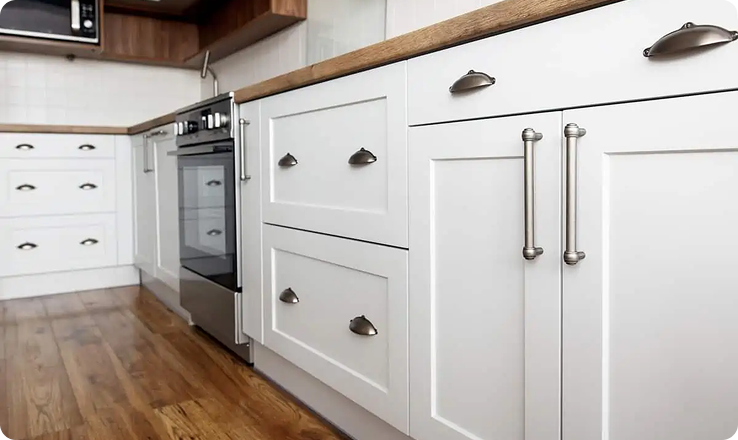
Yes, you can paint laminate cabinets. As cabinet painting specialists, we’ve seen how sharp they can look when it’s done right. If you want to repaint laminate cabinets, this guide will walk you through what actually works. The catch is adhesion. Laminate is slick by design. It resists stains, moisture, and most things you throw at it. This makes it great for daily life, but not so great for paint that wants something to grab.
This comes up a lot in NYC. A kitchen might work fine, but the cabinets look tired. Scuffed corners. Dingy doors. That “why does this still look like 2008?” feeling. Replacing cabinets can be a whole ordeal here, so cabinet painting often becomes the practical option.
What to Know Before Painting Laminate Cabinets
If you take one thing from this guide, let it be this: laminate needs the right system. Not just paint, but prep, primer and topcoats that are made to hold on.
Here’s what matters most:
The Condition of the Laminate Today
If edges are lifting, corners are swollen, or the surface is chipped, paint won’t magically hide it. Those spots can still show through. And in many NYC kitchens, the worst wear is near the sink and dishwasher where steam and splashes hit every day.
What Kind of Laminate You Have
Thermofoil is basically a vinyl wrap. It can loosen at seams over time, especially around heat. Melamine is usually tougher. Thin, paper-backed laminates can be more finicky and may show flaws faster once coated.
Primer is Not Optional
This is where many DIY jobs go sideways. A bonding primer is what helps paint stick to a sealed surface. It also helps block old cooking oils, cleaner residue, and smoke film. Yes, that stuff builds up more than people think. Most homeowners tell us the cleanup step is where they underestimate what’s really on the surface.
Not Every Paint Holds up on Cabinets
Some paints look fine on day one, then wear fast on high-touch doors. In smaller kitchens, Astoria, Sunnyside, parts of Manhattan, those doors get handled constantly. Durability matters.
Age and Buildup Affect the Finish
Older cabinets often have years of hand oils and cleaning layers. Under bright apartment lighting, that can show up as dull patches or uneven sheen if it isn’t dealt with early.
Steps Involved in Painting Laminate Cabinets
Laminate looks simple. It’s not. The best results come from a steady, repeatable process. And in city homes, you also have tight spaces, shared hallways, and limited airflow. So the workflow needs to be clean and controlled. With over a decade of hands-on experience in the field, we’ve learned the workflow matters just as much as the materials.
Surface Inspection and Cleaning
We check doors, drawer fronts, and boxes for loose seams, swelling, and edge damage. Paint usually fails first where the laminate is already separating, so we don’t ignore those weak points.
Then comes deep cleaning. Not the quick wipe down. The real one. Grease and residue are sneaky, especially around pulls and near the stove.
Scuff Prep
Laminate needs a dulled surface so the primer can grip. This step also helps blend small nicks and worn corners. It’s not the glamorous part of the job. But you’ll notice if it’s skipped.
Bonding Primer
A bonding primer is built for slick surfaces. Even coverage matters here. If the primer goes on patchy, your final sheen can look uneven. Teams with real cabinet experience treat primer choice as the make or break decision. Because it is.
Paint Coats Built for Cabinets
Cabinet finishes are usually built in multiple coats for coverage and cleanability. Doors, edges, and detailed profiles all need to look consistent, not pretty from far away.
Timing matters too. Rushing recoat windows can lead to a finish that looks fine until it doesn’t.
Curing and Protection
Paint can feel dry and still be soft underneath. Cure time is when the finish hardens and gets more resistant to scratches and cleaning. NYC humidity can slow this down. So can coastal air in parts of Long Island and the Hamptons. Planning for that is part of getting a finish that lasts. Our advice as industry experts would be to treat cure time like part of the coating system, not a bonus step.
Types of Paint That Work on Laminate Cabinets
There isn’t one single best paint for laminate cabinets, but cabinet grade options paired with a bonding primer are usually where durability comes from.
Here are the most common options people ask about:
- Chalk Paint: Chalk paint gives a soft, matte look and can hide small flaws. On laminate, it can scuff faster if the base layers don’t bond well, especially on edges and around pulls.
- Latex Paint: Latex is water based and easier to live with during the job, which helps in small apartments. But durability depends on the exact product and the primer underneath it.
- Oil-Based Paint: Oil based paint can cure to a hard, durable surface. The downside is odor and a longer cure window, which can be tough in enclosed spaces.
- Acrylic Cabinet Grade Paint: Many acrylic options are water based but cure tougher than standard wall paint. They’re often chosen when you want a furniture-like feel, not a basic color change.
- Milk Paint With a Bonding Agent: Milk paint can create a classic look with some natural variation. On laminate, it usually needs a bonding agent to help it hold up on corners and high touch spots.
How Long Does Paint Last on Laminate Cabinets?
With solid prep and the right coating system, painted laminate cabinets often last five to ten years, sometimes longer. And honestly, the biggest factors aren’t the color or the sheen. It’s prep quality, primer choice, and cure time.
Daily life plays a role too. Steam near the stove, moisture around the sink or constant grabbing near knobs. Cleaning habits matter as well. Harsh cleaners can dull the finish and wear it down faster. Over time, you’ll usually see signs before it becomes a problem. Based on what we track across recent cabinet projects, our numbers show the first wear almost always appears around the highest-touch areas.
This may include:
- Worn shines near handles
- Small chips at corners
- Fine cracking near seams
If those show up early, it’s often a bonding or cure time issue, not normal wear.
Common Challenges with Painted Laminate Cabinets
Bonding is the headline challenge. Laminate doesn’t naturally hold coatings, even when you’re using good materials. If the surface still has polish, wax residue, or grease buildup, paint can lift first at edges. That’s why careful prep and clear expectations matter.
Peeling, bubbling, and chipping arise due to these reasons:
- Dishwasher steam hitting the same area daily
- Moisture near sinks
- Heat swings radiators in older buildings can be brutal
- Tight layouts that lead to more bumps and knocks
Shortcuts tend to show up in the busiest spots. Always.
Painted vs Refaced Laminate Cabinets: What’s the Difference?
Painting changes the color and sheen. It keeps the same cabinet layout and door style. It’s often the best fit when the cabinet boxes are solid and you want a strong refresh with less disruption. In co-ops and condos, it can also work better with strict work hours.
Refacing keeps the cabinet boxes but replaces doors and drawer fronts. Some projects also add new outer layers to visible surfaces. It can change the style more dramatically, but it usually costs more and takes longer.
Most people decide based on budget, timeline, and how big of a change they want. Painting is the faster appearance upgrade. Refacing is the bigger makeover.
Give Your Cabinets a Fresh Start
Laminate cabinets aren’t a lost cause. With the right bonding plan and a controlled process, you can get a clean finish that holds up to real daily use, even in a busy city kitchen.
If you want a premium, low-stress experience, Mint Paint & Floor focuses on careful protection, tidy work habits, and clear communication from start to finish. Our team brings 100 plus years of combined experience, and we back our work with a written craftsmanship guarantee.
To request an estimate or consultation in Manhattan, Brooklyn, Queens, Long Island, or the Hamptons, contact Mint Paint & Floor today.