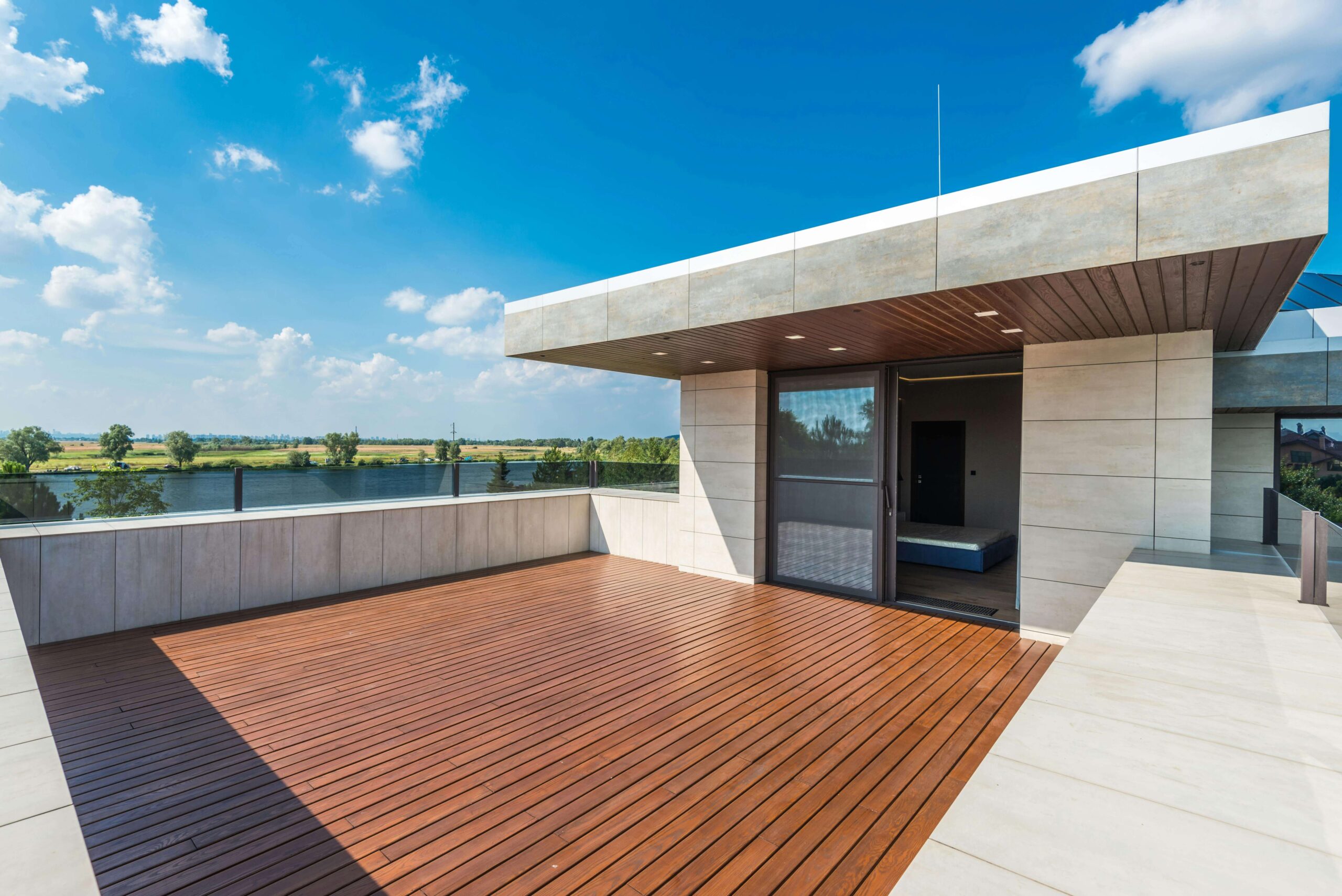
Choosing the right deck paint colors for your outdoor space is mostly about what your deck deals with every day. Look at your home from the curb. Pay attention to how much sun hits the boards. Think about how the space gets used. The best color is the one that fits your exterior and still looks good after rain, heat, shoes, and patio furniture have had their turn.
color also sets the mood outside. It can make the space feel bright and open, or warm and settled. It can read modern, or more classic. Same layout, same furniture. Different color, different vibe.
What Makes A Deck Paint Color “Perfect”?
A “perfect” deck color looks like it belongs with your home and everything around it. It should make sense next to siding, trim, brick, stone, railings, and what you see beyond the deck, too, maybe trees, gardens, or nearby buildings, all of it.
It also has to hold up. A deck gets more abuse than most surfaces, so the “perfect” color is one that stays steady through scuffs, fading, and everyday use without looking worn too fast.
And outdoor paint choices don’t behave like interior ones. Light changes all day. Shade shifts. Dust and pollen show up. Moisture hangs around longer than you’d think. So yes, you still choose what you like, but the final result depends on prep, the right product, and the finish you pick.
Popular Deck Paint Color Options To Consider
Some colors stay popular because they work with a lot of exteriors and they’re easy to live with. They also make decorating simpler when you swap cushions, planters, or rugs later on.
If you want a clean starting point, here are strong options to consider:
- Neutral tones (grays, beiges, whites)
- Earthy and natural shades (browns, tans, greens)
- Bold and statement colors (navy, black, deep red)
- Weathered or wood toned finishes
- Light colors for small or shaded decks
Factors That Influence Deck Paint Color Choice
Deck color is never “just color.” The same shade can look soft in one space and harsh in another. Sun, shadows, and the rest of your exterior change the outcome more than most people expect.
If you want the choice to feel right once it’s finished, below are the key factors to use as a guide:
The Style And Color Of The Home’s Exterior
Start with what’s already locked in. Siding, trim, brick, stone, and window frames set the direction, so your deck color should connect to them in a clear way. If your exterior has strong contrast or a lot of materials, a quieter deck color often looks more refined. If the exterior is simple, you can go deeper or bolder without making the whole look feel busy.
The Surrounding Landscape And Natural Lighting
The sun can flip a color on you. A warm gray can look cooler in bright midday light, then warmer again later in the day. That shift is normal, and it’s why testing matters.
Greenery changes things too. Leaves and grass reflect onto the surface, so cool colors can pick up a slight green cast in shade, and warmer colors can look richer near plants and wood fencing.
The Size And Layout Of The Deck
Light colors can make a smaller deck feel more open. Dark colors can make a larger deck feel more grounded and intentional. Layout matters because you don’t see a deck from one angle. Steps, railings, built ins, planters, and skirting break up the view, so the color should look good from multiple spots. Not just straight on.
Climate And Sun Exposure In The Area
Strong sun can fade a finish faster. Heavy shade can keep boards damp longer after rain. Both affect how the paint ages over time. In New York, weather swings are part of the deal. Heat, rain, cold snaps, wind. That’s why a “perfect” deck color is usually one that stays forgiving through seasons, not one that only looks great on a perfect weekend.
The Type Of Material The Deck Is Made From
Wood, composite, and older painted surfaces don’t take paint the same way. Grain, board condition, and what’s already on the surface can change how smooth the finish looks and how long it lasts. If boards are worn, patched, or uneven, very light or very dark colors can highlight flaws. Mid tones are often a safer choice because they hide small imperfections while still looking clean and finished.
How Different Deck colors Affect Outdoor Ambiance
Light colors tend to feel open and fresh. They can lift a shaded space and make the deck feel less tight, especially when buildings or fencing sit close by. They also give you a clean base for plants and furniture. Almost anything works.
Dark colors feel bold and modern. They look sharp with simple railings and clean lines, and they can make the whole space feel more finished. The trade off is simple. Dust, pollen, and footprints show up faster, especially on busy decks, so the deck looks best when it’s kept up.
Warm tones like tan, soft brown, and warm gray feel easy and inviting. Cool tones like slate and blue gray read crisp and calm. And one detail people miss. Cushions, rugs, lighting, and even planters can change how the color shows up, especially once the sun goes down.
Deck Paint Color Trends Worth Knowing
Deck color trends feel quieter lately. Less “look at me,” more “this makes sense with the house.” That premium look usually comes from a color that’s chosen on purpose, then applied with the right prep so it lays flat and holds up. Here are five trends we’re seeing more of.
Greige And Warm Neutrals
Greige sits right between gray and beige, which is why it works so often. It pairs well with warm exteriors, cool exteriors, and everything in the middle. The finish looks clean and updated, but it doesn’t feel harsh.
It also plays nicely with common exterior details. White trim, darker window frames, brick, stone. Decorating is easy, too. A warm neutral deck gives you room to use black metal furniture, natural wood pieces, or brighter cushions without the space feeling busy.
Deep Charcoal And Slate Tones
Charcoal and slate give a deck a modern edge. They make railings, steps, and built-ins look more defined, and they look especially good with simple, structured furniture.
On paper, these shades are perfect. In real life, they show dust and pollen sooner, and uneven coverage stands out. So durability and prep matter. That’s where a pro finish really earns its keep. A deep color only feels premium when it goes down evenly and stays that way through the season.
Muted Greens And Sage
Muted greens and sage keep coming back because they feel calm and grounded. They connect with plants, trees, and garden beds in a way that doesn’t try too hard.
They’re also flexible. Sage can look classic next to a traditional exterior, and it still feels current with modern trim and black accents. If the deck is meant for slow mornings and quiet evenings, this is the vibe.
Classic White And Crisp Off White
White and off white decks look bright, clean, and timeless. They can lift a shaded space and make a smaller deck feel more open.
The key is picking the right white. A crisp, bright white can look stunning, but it will show dirt quickly. A softer off white is often easier day to day, while still giving you that fresh, elevated feel.
Two Tone Deck Color Combinations
Two tone decks are showing up more because they add structure without being loud. One color goes on the deck boards, and a second color goes on railings, risers, or trim.
It can make the deck feel custom, like it was planned from the start. It also helps highlight steps and edges, which matters when you’re actually using the space. Not just taking photos. Keep the contrast clean. Keep it simple. And it reads premium.
Matching Deck Colors To Your Home’s Exterior
Deck color looks best when it coordinates with siding and trim in a way that feels clear. If trim is bright and crisp, a mid tone deck can balance it. If siding is dark, a lighter deck can keep the exterior from feeling too heavy.
A complementary approach usually feels calm and timeless. That means choosing a deck color that shares an undertone with what’s already on the house. Warm with warm. Cool with cool. It’s subtle, but it makes the whole exterior feel more put together.
A contrasting approach can work, too, as long as it’s controlled. Think “intentional contrast,” not clash. Roofing, brick, and stone matter here because they’re large, fixed colors. When the deck respects those permanent elements, the result reads premium and finished.
Ready To Transform Your Deck With The Right Color?
Getting the color right makes the whole outdoor space feel more polished, easier to style, and better to spend time in. If you want a stress free process and a finish that looks clean up close, Mint Paint & Floor brings the kind of detail work that shows. Careful prep, a sharp eye, and a steady, professional approach shaped by over 100 years of combined experience. Explore deck and exterior painting services through Mint Paint & Floor and reach out when you’re ready to choose deck paint colors that fit your home and hold up beautifully.